Understanding God’s Love

God is love. This is a wonderful truth and phrase I frequently come across on the internet. It’s something we should continually rejoice in and reflect on! But so often, the messages of God’s love miss the mark. There tends to be an emphasis on God’s love for you and for me, but the truth about how God views sin is avoided. Oftentimes, messages about God’s love can be very feelings-focused. However, understanding God’s love requires biblical knowledge. And when we gain a more well-rounded perspective of His love, we fall deeper in love with our Savior and are better equipped to share the fullness of His love with others. So, let’s dive into some truths about God’s love.

God’s love is steadfast

About a year or so ago, the word steadfast started standing out to me in my Bible reading. I would look into this word in my Hebrew-Greek Keyword Study Bible (affiliate link) and on Blue Letter Bible as it popped up in different passages. Continually, I would find the Hebrew word hesed, describing God’s steadfast love. This word comes up over 250 times throughout Scripture and it refers to God’s goodness, loving-kindness, and faithfulness.

God’s steadfast love is greater than feelings. It is central to His very character and His character does not change. (Hebrews 13:8) He doesn’t love us because we are worthy or amazing. Actually, the Bible makes it clear that we are none of those things. Without Christ, we are enemies of God. (Romans 5:10) He loves us simply because it’s who He is. (1 John 4:8) This is great news for us!

God is love. Meaning, God is steadfast, good, kind, and faithful.

If God is love, is He capable of hate?

Since God is love, many assume that He does not and cannot hate. However, many misunderstand that because He is love, He must hate certain things. The article Does God Hate? on GotQuestions.org says it so well: “God’s nature is love—He always does what is best for others—and He hates what is contrary to His nature—He hates what is contrary to love.” Because God is love, He cannot and does not delight in wickedness. (Psalm 5:4) The Bible says God hates sin, wickedness, and evil and He will righteously judge those who rebel against Him and reject His grace and mercy. 

This is a challenging concept for us to wrap our finite minds around, so if you are struggling with it, I recommend reading this article and the linked Scripture passages. But remember, because God is perfect (and unchanging), He can simultaneously love and hate without sinning and without contradicting His own character. 

God is love. Therefore, He must also hate sin, wickedness, and evil.

How God shows His love to us

Romans 5:8 says, “God shows his love for us in that while we were still sinners, Christ died for us.” God hates sin and will punish unrepentant evil doers, but the good news is that He offers forgiveness to all who repent of their sins and believe in Jesus as Lord and Savior. 

When I mentioned at the beginning of this post that messages of God’s love tend to miss the mark, the mark they’re often missing is the Gospel. Understanding God’s love starts with understanding the Gospel message: 

We are all born sinners and the Bible says there is no forgiveness of sins without the shedding of blood. (Hebrews 9:22) Out of His great love, Jesus Christ, both fully God and fully man, died on a cross and rose from the dead to pay the penalty for our sins. All who put their faith in Christ and follow Him will be saved from hell. Those who are saved are born again (John 3:3), are new creations in Christ (Galatians 2:20), are given the gift of the Holy Spirit (Romans 8:9) and eternal life! The Bible makes it very clear that we can’t earn our way to heaven. But, the good news of the Gospel is that God is so rich in love and mercy, that His desire is to save unworthy sinners. (Ephesians 2:4-5)

When reflecting on the love of God and sharing Christ’s love with others, do not forget the Gospel! Jesus coming to save sinners was the ultimate expression of His love. If we miss this, we miss His love entirely.

Because God is love, He forgave and justified unworthy sinners.

Understanding God’s Love

I hope reflecting on the depth of God’s love encourages you today. Understanding God’s love from a biblical perspective is life-changing. We can enjoy the simple messages of God’s love and the warm fuzzy feelings we get from a great quiet time or a particularly impactful worship set. But remember, His love is greater than feelings and short statements. Remember and rejoice in the many ways He has revealed His love throughout Scripture. You will be exceedingly blessed as you grow in your knowledge and understanding of God’s great love for you. And as a result, your love for Him will increase.

To conclude, let’s make Paul’s prayer for the Ephesians our own prayer:

“For this reason I bow my knees before the Father, from whom every family in heaven and on earth is named, that according to the riches of his glory he may grant you to be strengthened with power through his Spirit in your inner being, so that Christ may dwell in your hearts through faith—that you, being rooted and grounded in love, may have strength to comprehend with all the saints what is the breadth and length and height and depth, and to know the love of Christ that surpasses knowledge, that you may be filled with all the fullness of God.”

Ephesians 3:14-19

Permissions

All scripture quotations are from the ESV® Bible (The Holy Bible, English Standard Version®), Copyright © 2001 by Crossway, a publishing ministry of Good News Publishers. Used by permission. All rights reserved.

How to Share the Gospel | 5 Tips for Sharing the Gospel

With whom will you share the Gospel with this year? Who in your life needs the hope and loving guidance of Christ? Does anyone come to mind? Or are you having trouble thinking of someone? Whether you can think of someone or not, I wanted to take a few moments to consider Jesus’ call on our lives, how to proclaim the Gospel, and who to share the good news with.

The Great Commission

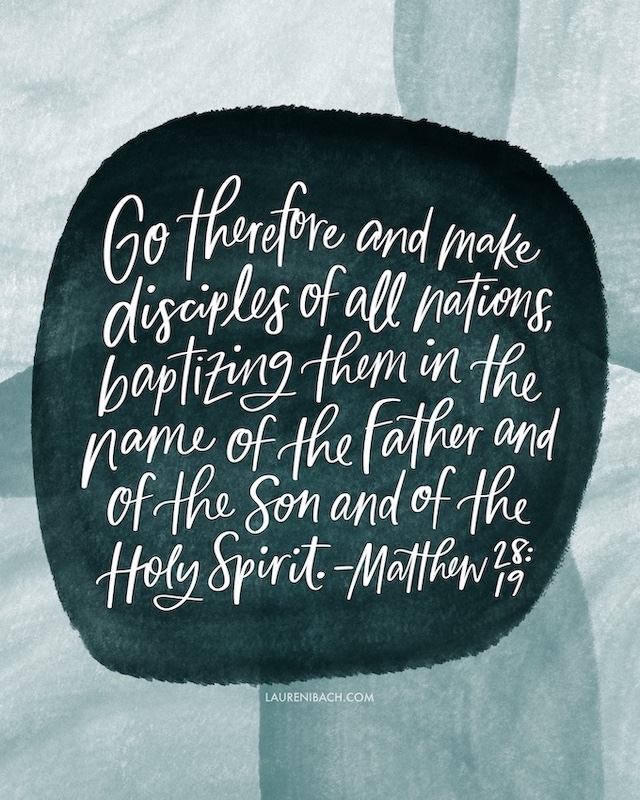
“And Jesus came and said to them, “All authority in heaven and on earth has been given to me. Go therefore and make disciples of all nations, baptizing them in the name of the Father and of the Son and of the Holy Spirit, teaching them to observe all that I have commanded you. And behold, I am with you always, to the end of the age.”

Matthew 28:18-20

In Matthew 28, Jesus commands His disciples to go out and make more disciples. This command applies to us as well. It’s not just for certain people in the church with the spiritual gift of evangelism or people considered missionaries. This clear command in the Bible is for all Christ followers, so we must be praying and considering to whom, how, and where God is specifically calling us to proclaim the good news.

Share the Gospel

Besides fear, I think possibly the biggest roadblock to sharing the Gospel with others is not knowing how to articulate the message. This is part of the reason it is so important to reflect continually on the Gospel as believers. We need to know and be prepared to share with others what we believe in. (1 Peter 3:15) 

The message

We are all born sinners in need of forgiveness and no amount of good works can erase our guilt before God. The Bible says that there is no forgiveness without the shedding of blood. (Hebrews 9:22) The Gospel is the good news that out of His great love for unworthy sinners, Jesus Christ came to save. He shed His own blood and died on a cross for the forgiveness of sins and rose from the dead three days later, proving He was God. Jesus said in order to be forgiven, we must repent and believe in Him and Him alone. (Mark 1:15) By His grace, through faith we are saved from hell and the wrath of God, and instead are promised eternal life! (Ephesians 2) See this post for a more detailed explanation of the Gospel.

Someone once said, being a Christian is not about being a good person, it’s about being a forgiven person. In other words, it’s not about what we do. It’s about what Christ has done. Being a Christian is not about ritualistic religion. It’s about having a relationship with the Savior. These truths are so important to clarify when ministering to others. Even many church-goers mistakenly believe we receive righteousness by our own merit. Two thousand years ago, Jesus spoke with many who held these same beliefs – many of whom were religious leaders. And, He made it very clear that salvation is not obtained by following the Law and religious rules. We are saved by grace alone through repentant faith alone. True, born again Christians know that Christ alone has saved them and that their works are simply an outpouring of their faith in Him.

Think of your own story

When thinking about who we might share the Gospel with, it can be helpful to think about our own stories of coming to faith in Christ. Where did you hear the Gospel? Did it make sense right away or did it take some time? At what point were you led to repent and believe?

My story

I first heard that Jesus died and rose from the dead for the salvation of sinners in the church I grew up in. The way I understood salvation for the first 19 years of my life was that if I followed the Ten Commandments well enough, I would go to heaven. If I didn’t follow them enough, I would go to hell. I wondered how a person could ever be sure if they would go to heaven and I really didn’t understand how Jesus’ death and resurrection impacted me personally.

Towards the end of my freshman year in college, two friends encouraged me to pursue a relationship with Christ by starting a prayer journal. I had shared with these friends about the heaviness I felt over past mistakes and fears of where my life was headed. They told me if I confessed all of my sins to Jesus and told Him that I wanted to change and live for Him, He would forgive me and set me free of my regrets and mistakes. They said He would change my life.

By what could only be His grace, it just made sense. I believed and spent my spring break writing a long letter, confessing my sins and desire to live for Him for the rest of my life. I knew what Jesus had done on the cross, but it wasn’t until that point in my life that I understood how that impacted me personally. Since then, I have continued to live for Him and I now have assurance of salvation.

When you share the Gospel

When you share the Gospel with others, if you have time, share your own story of coming to faith. Ask about their past experiences. Do they know who Jesus is and what He came to accomplish? Do they think the world needs a Savior? If so, how do they believe people are saved? Asking questions can give you an idea of what truths they’ve heard, haven’t heard, or don’t fully understand, giving you the opportunity to minister to them on a much more personal level.

Who in your life needs to hear the Gospel?

Truthfully, we all need to hear the Gospel. We need to hear it and believe in it in order to be saved. But even after that, we need to be reminded of the hope we have in Christ. Maybe God has already been putting someone on your heart to share the good news with.

Or maybe, you need to take some time to pray about it. Ask that God would reveal to you who in your life needs to hear the Gospel. Could it be a co-worker of another faith? A loved one who has walked away from the truth? A friend who is doubting? Pray for God to open doors to have spiritual conversations, that He would prepare you and give you courage when opportunities come. Pray for the hearts of those He plans for you to minister to – that Jesus would soften their hearts and make them open to His message of salvation.

And remember, we are called to be obedient and proclaim the Gospel, but God alone does the saving. It’s important to communicate the urgency of our need to repent and believe, but you may not get a profession of faith from the recipient of the good news right away. In my experience, most often, people need time to think about what you’ve shared. Only God can change hearts, so we are not failures if the message isn’t received. 

So, to close this post, I wanted to share my top 5 tips for sharing the Gospel so you can confidently go out in boldness this year to proclaim the good news.

My top 5 tips for sharing the Gospel

1. Be prayerful.

Pray for God to reveal to you who needs to hear the Gospel. Pray for open doors, preparedness, and courage. And, pray for the hearts of those He has put on your heart.

2. Know the Gospel message. 

And be comfortable communicating it out loud. Reflect on it in your quiet time, write it down, and practice explaining it out loud in a no-pressure environment – like with people close to you who already believe. See this post for additional help.

3. Communicate the importance of repentance and belief.

There are many misconceptions of how people are saved. Jesus makes it very clear in Scripture that only those who repent and believe will be saved. (Mark 1:15) We must be born again. (John 3:3)

4. Get comfortable sharing your story. 

Write a one minute testimony. (If you can include the Gospel message in there, even better!) That way, you’ll have a general idea of what you’ll say when you have the opportunity to share your own story of coming to faith in Christ. Include: Your life before Christ, when you put your faith in Christ, and how He continues to work in your life.

5. Listen and ask genuine questions. 

Don’t treat people like a project. Really get to know them. There will likely be disagreements, but respond by speaking the truth in love. (Ephesians 4:15, 1 Peter 3:15)

Who will you share the Gospel with this year? And what steps will you take to prepare for that conversation?

To receive free resources and weekly encouragement to help you grow in your faith, subscribe to my mailing list!


Permissions

All scripture quotations are from the ESV® Bible (The Holy Bible, English Standard Version®), Copyright © 2001 by Crossway, a publishing ministry of Good News Publishers. Used by permission. All rights reserved.

A Christmas Devotional: The Shepherds | Luke 2:8-20

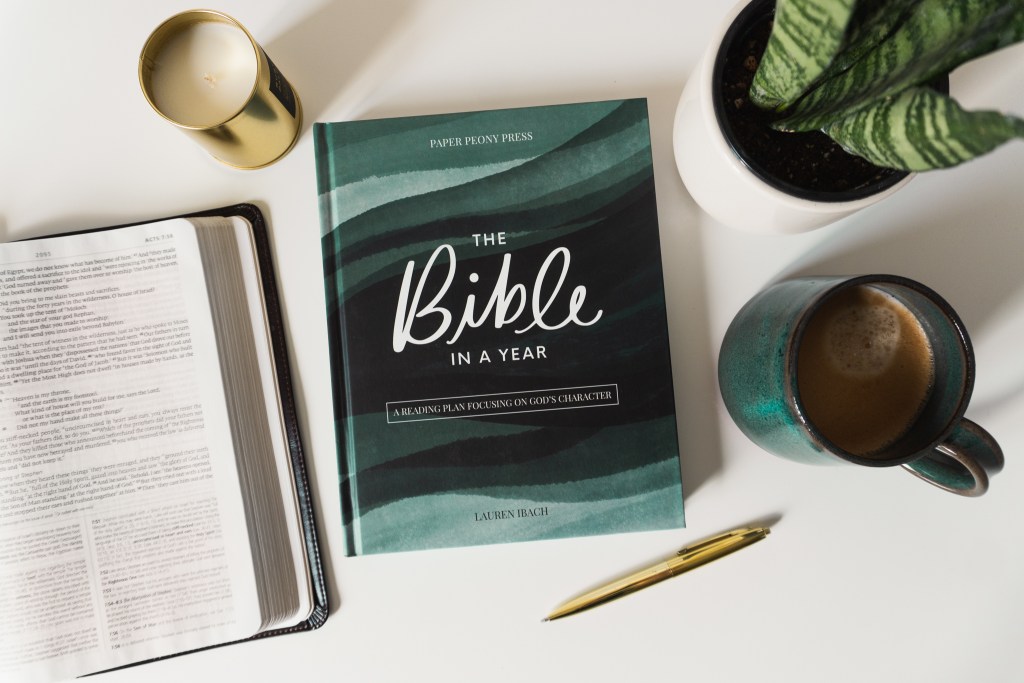
Recently, I received some good news. My publisher and I were getting ready to release my new book, The Bible in a Year: A Reading Plan Focusing on God’s Character. However, the shipment was stuck at a port and we had no idea when it would be unloaded. After many days and weeks of prayer, I received a call from my publisher. The shipment was unloaded and would arrive at the warehouse later that evening. I was thrilled! I had asked many to pray that we’d be able to release the book before Thanksgiving. And God made a way. I praised Him for answering our prayers and I couldn’t wait to tell everyone when I got the good news!

When was the last time you received some good news? How did you respond? With Christmas just days away, I wanted to reflect on the Christmas story. At first, I didn’t have a particular passage in mind. But, as I read the first couple chapters of the gospel of Luke, the story of the shepherds stood out to me. They too received good news and I was particularly impacted by their response and how it applies to us today. So, let’s dive into the passage.

Luke 2:8-14

[I]n the same region there were shepherds out in the field, keeping watch over their flock by night. And an angel of the Lord appeared to them, and the glory of the Lord shone around them, and they were filled with great fear. And the angel said to them, “Fear not, for behold, I bring you good news of great joy that will be for all the people. For unto you is born this day in the city of David a Savior, who is Christ the Lord. And this will be a sign for you: you will find a baby wrapped in swaddling cloths and lying in a manger.” And suddenly there was with the angel a multitude of the heavenly host praising God and saying,

“Glory to God in the highest, and on earth peace among those with whom he is pleased!”

The Shepherds Hear

Try to imagine what it must have been like to be the shepherds. They had a humble job tending to sheep. Until one night, an angel appeared and the glory of the Lord was visible to them. It was almost too much for them to handle. They were afraid. The New International Version says they were terrified. But, the angel quickly told them not to fear because he came to bring good news. The Savior of the world had been born! And, the shepherds could find the newborn Christ swaddled in cloths, lying in a manger in Bethlehem. After hearing this news from the one angel, they suddenly heard an army of angels in heaven singing praises to God.

Having trouble imagining this? I don’t blame you! Before the Bible was completed, God sent messengers to speak to His people. He spoke through many prophets and on rare occasions, He sent angels. But today, we have the complete written word of God and we can hear the good news directly from God Himself through Scripture.

The Good News

Woven throughout the Bible is the clear message that we are all sinners and that payment must be made in order for sins to be forgiven. However, no amount of worldly sacrifices or payments in the form of good works can cancel the debt we owe God. The just punishment for sinning against the infinite God, Creator, and Ruler of the universe is hell. However, this is not the fate He desires for humankind.

John 3:16 says it so well: “For God so loved the world, that he gave his only Son, that whoever believes in him should not perish but have eternal life.” Jesus Christ – the Son of God who is fully God and fully man – came into the world to save sinners. He died a brutal death on a cross and three days later, rose from the dead. All who repent and believe in Christ’s death and resurrection receive forgiveness. Their debt is paid in full and they are promised eternal life. We are saved by His grace through faith. (Ephesians 2:8-9) This is the good news – this is the Gospel.

God has revealed the good news to us, and like the shepherds, we must listen.

The shepherds were awaiting the promised Messiah. Little did they know they would meet an angel who would tell them the good news and how to find the newborn Savior of the world! They heard the good news and responded. We too have been given the good news and we must also listen and respond.

Luke 2:15-20

When the angels went away from them into heaven, the shepherds said to one another, “Let us go over to Bethlehem and see this thing that has happened, which the Lord has made known to us.” And they went with haste and found Mary and Joseph, and the baby lying in a manger. And when they saw it, they made known the saying that had been told them concerning this child. And all who heard it wondered at what the shepherds told them. But Mary treasured up all these things, pondering them in her heart. And the shepherds returned, glorifying and praising God for all they had heard and seen, as it had been told them.

The Shepherds Respond

We can learn a lot from the shepherds’ response to the good news. First, they believed and quickly went out to seek Christ. When they found Him, they told others the good news. And upon their return, they praised God for what they saw and heard. Everything had turned out just as the angel said it would.

This reminds me of many stories of those who put their faith in Christ. John the Baptist pointed out Christ to Andrew, who immediately sought after and followed Him. Then, he told his brother Peter, “We have found the Messiah!” and Andrew brought Peter to Jesus. When Philip put his faith in Christ, he too followed. Then, he found Nathanael to tell him the good news. When Philip brought him to Christ, Nathanael responded in praise: “Rabbi, you are the Son of God! You are the King of Israel!” (John 1:35-51) Likewise, when Jesus revealed He was the Savior to the woman at the well, she went and told the town. Many Samaritans came to Jesus because of the woman’s testimony and when they heard what He had to say they too believed the good news.(John 4:39-42)

When we truly believe in Christ, we are compelled to praise and share the good news with others.

Questions to consider

The shepherds heard the good news and believed. They responded by going out to find Christ and when they did, they went out and told others. 

Have you responded to the good news? 

If so, is your desire to praise Christ and tell others about Him increasing? Why or why not? Maybe you consider yourself a believer, but you don’t relate to how the shepherds and disciples responded. If your faith doesn’t compel you to praise God continually and share the good news with others, ask God to reveal why that is. Ask Him to increase your trust in who He is and what He says.

If not, you can put your faith in Christ today! Trust He is who He says He is: God and Savior. Confess to Him that you are a sinner, that you desire to change and live for Him, and trust you are forgiven because of His death and resurrection. Praise Him! Tell someone (tell me!) if you are putting your faith in Christ today. And, start pursuing a relationship through prayer and reading the Bible.

If you aren’t ready to take that step, what’s holding you back? The shepherds believed before they even saw Jesus lying in the manger. But as they sought Him, walking by faith, God brought greater clarity to what was true. Like the shepherds, we don’t have to have it all figured out right away. God simply wants us to trust Him and He will reveal Himself in greater measure as we seek Him in faith.

Conclusion

To conclude, when we receive good news, we get excited! The better and bigger the news, the more quickly we want to share it and the more people we want to share it with. I experienced this when I got that call from my publisher recently about my book shipment being unloaded at the port. Maybe you’ve received good news recently and can relate to the thrill of it and the desire to tell others! If we respond to good news in this way in our day-to-day circumstances, why would we respond to the good news of the Gospel any differently?

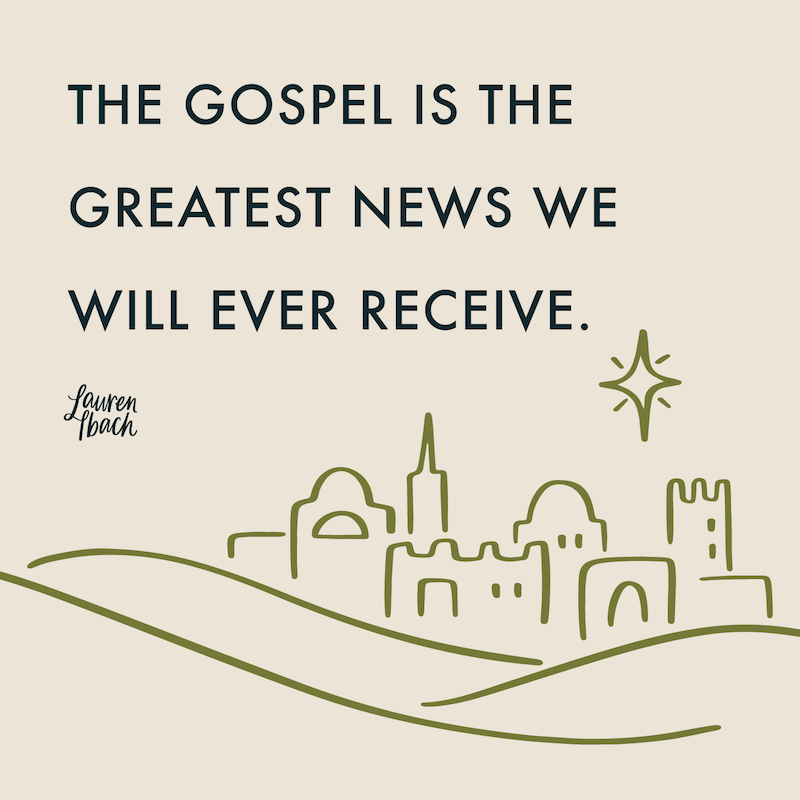
The Gospel is the greatest news we will ever receive. True belief in the message results in overflowing joy that we express to God and share with others.


Many people are more open to spiritual conversations during the Christmas season. I invite you to share this post with someone in your life who needs to hear the good news and hope we celebrate this time of year.

To receive free resources and weekly encouragement to help you grow in your faith, subscribe to my mailing list.

Permissions

Unless otherwise indicated, scripture quotations are from the ESV® Bible (The Holy Bible, English Standard Version®), Copyright © 2001 by Crossway, a publishing ministry of Good News Publishers. Used by permission. All rights reserved.

Pin it!
Pin it!

10 Tips to Help You Successfully Complete a 1-Year Bible Reading Plan

Reading the Bible in a year can seem like an overwhelming task. Many of us have read parts of the Bible or started reading plans, but never finished. And, we know that sticking to our plans is not always easy. Life gets busy, we get tired, we get confused by the text… We often have good intentions, but the follow-through is hard. That’s why I wanted to share 10 tips to help you successfully complete a 1-year Bible reading plan.

10 Tips to Help You Successfully Complete a 1-Year Bible Reading Plan

1. Before you begin, pray. And pray continually.

It can be tempting to just jump right in and start reading, but we must not forget to start with prayer. Grab your Bible, and before you start reading, ask God to help you understand His Word. Ask Him to help you stay focused and to remember what you read. Ask Him to give you wisdom and help you to apply what you read. Pray to Him about anything else you think of in regards to reading Scripture. Make this a daily habit.

2. Choose a solid Bible translation.

This is super important to consider before beginning a 1-year Bible reading plan. Just because a translation is offered on your favorite Bible app or website, doesn’t mean it’s a good one. Do your own research, but I recommend ESV, CSV, NIV, or NASB. Read portions of different sound translations to help you choose one that is relatively easy for you to understand. Stay away from paraphrases like the Message (MSG). They can be helpful at times for understanding the text, but they are not Scripture. Also, always avoid false translations like the Passion (TPT), which are not accurate translations at all. (See this article for more information on TPT or check out this post to do more research.)

3. Choose a plan that’s right for you.

There are many free plans to choose from on the Bible app or plans you can purchase from your local Christian bookstore. Of course, I recommend my book The Bible in a Year, which is a 1-year Bible reading plan focusing on God’s character. For five days out of the week, you’ll be reading directly from the Bible. The sixth day, you will focus on one verse from that week’s reading and read a short devotional highlighting an attribute of God. The seventh day is either a catch-up day (if you missed a day during the week) or an opportunity for you to focus on a passage of your choice that day. Check out my book, The Bible in a Year HERE and see if it looks like a good fit for you.

4. Track your progress.

My book, The Bible in a Year has writing space for you to track your progress. Whatever the plan you choose, most have a way for you to document what you’ve read. This is super helpful for staying on track and organized. However, be careful to not get legalistic about your time reading the Bible. It can be a fine line between remaining obedient to your time in God’s Word each day, even when you don’t feel like it and treating that time as something to just check off the list. Continue praying for a right mindset about how you approach tracking your progress.

5. Schedule designated time each day.

It is super important that we prioritize our daily reading time. When we let it become an afterthought is when we struggle to stick to the plan. Determine from the get-go that your time reading the Bible each day is a top priority and schedule it at a time of day that you can typically count on. Maybe that’s in the morning before classes start or the kids get up. Maybe it’s on your lunch break. Or, perhaps it’s after dinner sometime.

Scheduling designated time focused on your 1-year Bible reading plan also means accounting for the weekends, holidays, vacations, and simply those super busy weeks. You don’t have to have it all figured out before you start, but having a general idea of how you will stay on track when you’re outside of your normal routine will help equip you for success!

6. Prayerfully set boundaries for yourself.

Think and pray about under what circumstances you struggle the most to stay focused and mentally sharp. Sometimes we don’t always have control over that, but when we do, it’s important to set boundaries to protect our time in God’s Word. For example: There have been many times I’ve gone to my favorite coffee shop to work on my Bible studies. But, so often, I run into someone I know and get distracted. So now, when I know I need to have focused time in God’s Word, I stay home or drive to a park and sit in the quiet car.

That’s just one boundary of mine, but consider yours. Is your mind more sharp in the morning or evening? Set a boundary to avoid the times of day you’re less focused. Do you doze off when you sit and read in a comfy chair? Set a boundary to read at the table. Again, no need to get legalistic about this – a boundary is meant to help you, not to be an added burden.

7. Have an accountability partner.

Finding a loved one to do a reading plan with you is ideal. The last time I did a Bible reading plan, my husband did it with me and there were several times I felt like giving up, but because he was doing it too, I stuck with it… and finished! If you can’t find someone who wants to do a 1-year Bible reading plan with you, at the very least, find a family member or friend who is willing to be your accountability partner. Communicate to that person what you need from them. Would you appreciate a text once a week to see if you’re staying on track? Do you need them to help you stick to a boundary? Would you like them to ask you what you’ve been reading and learning every couple weeks? Do you want them to pray for you? Having a helpful buddy to encourage and motivate you to keep going can be a game changer!

8. Read out loud when you can.

Does your mind wander off when you just read in your head? Are you like me and find yourself getting distracted and re-reading portions over and over again? Engaging more of our senses and reading out loud can really help keep our minds focused. This is different from listening to a recording of the Bible, which can be helpful in its own way – especially if you have poor eyesight or have trouble speaking. But if you’re able, I highly recommend reading out loud when you can. (At least try it!)

9. Journal, but keep it brief.

It can be easy to fall into the habit of treating a 1-year Bible reading plan like something to check off the daily to-do list. We can start with the best intentions and still fall into this trap. When we treat our reading plans this way, we fail to reap all the benefits of daily time in Scripture. As a consequence, we often quit.

Journaling about what we read each day (or even just each week) can help us remember that reading the Bible isn’t just a legalistic ritual. It’s for our Spiritual benefit – to grow in wisdom, knowledge, and understanding – and ultimately, to fall more in love with God!

Reading the Bible in one year is already an overwhelming undertaking for many, so keep your journaling goals attainable. My book, The Bible in a Year is a reading plan focusing on God’s character and has a few lines of journaling space for each day. When you finish your daily reading, write down one attribute of God that stood out to you. Or, journal one new thing you learned. Whatever you choose to journal, keep it brief to avoid having it become burdensome. Don’t underestimate how taking a quick moment to journal some key truths from your reading can add to the depth of your time in God’s Word.

10. Share what you read with someone else.

Get in the habit of sharing what you’re reading with others. It will be good practice for you to remember what you learned and process what passages you’re struggling with. It can also help with applying the truths you’re learning to your life. And of course, you won’t be the only one who benefits! Whoever you share with will get to hear about God and His Word and possibly be inspired to seek Him on his or her own!

Be encouraged! You can successfully complete a 1-year Bible reading plan!

I hope these 10 tips to help you successfully complete a 1-year Bible reading plan inspire you to make the commitment and do it! I may be writing this post in December for those of you New Year’s resolution planners, but if you’re reading this after the holidays, you can start a 1-year Bible reading plan whenever! Today is a great day for committing to reading God’s Word daily.

Be sure to check out my book, The Bible in a Year: A Reading Plan Focusing on God’s Character. I’d love to help you get into the Word of God, reflect on His character, and learn how to apply what you’ve read to your daily life!


Additional Resources

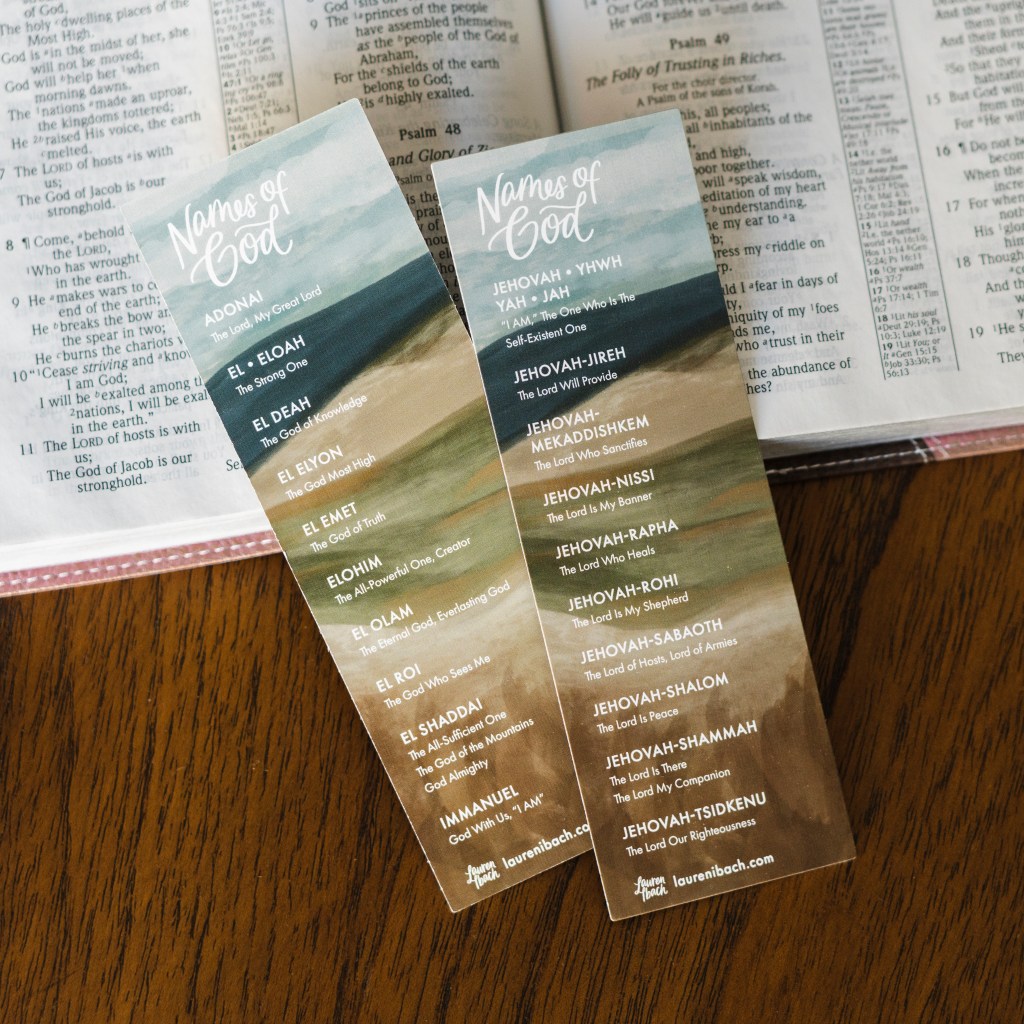
Names of God Bookmark
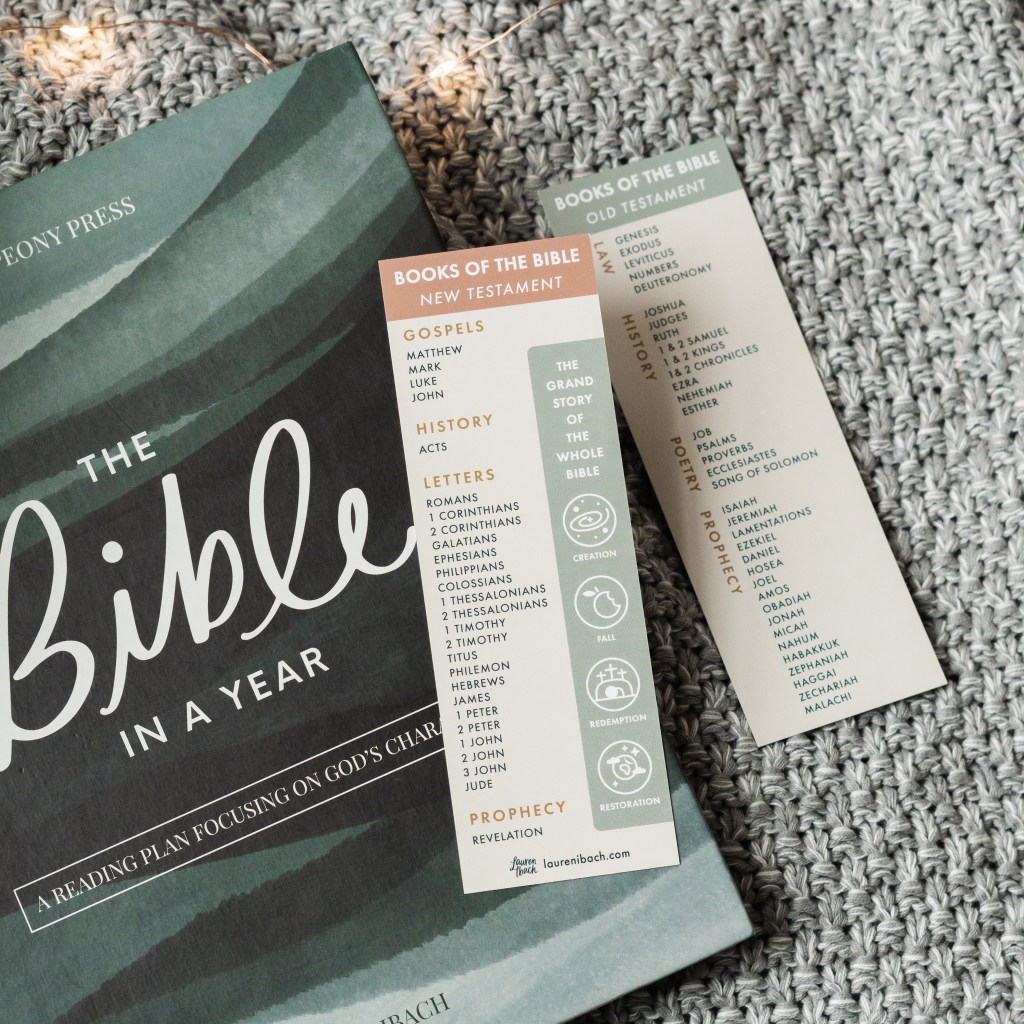
Books of the Bible Bookmark

Knowing God’s Character: 4 Ways Our Lives Are Transformed When We Trust Who God Is

As I have grown in my faith, I have learned the importance of knowing God’s character. When we reflect on who He is and how He has revealed Himself through Scripture, it changes everything. To celebrate the release of my book The Bible in a Year: A Reading Plan Focusing on God’s Character I wanted to share 4 key ways our lives are transformed when we really know and trust who God is.

1. Knowing God’s character builds our faith.

When we read the Bible and look for examples of God’s character, we are encouraged. Whatever verse or passage we are reflecting on or studying, it is so beneficial to get into the habit of looking for the attributes of God. Sometimes we can find them clearly stated, like in Lamentations 3:22-23: “The steadfast love of the LORD never ceases; his mercies never come to an end; they are new every morning; great is your faithfulness.” We literally read His love is steadfast and unceasing, He is merciful, and faithful. 

But in many passages, we have to do just a little more digging. For example, Genesis 1:26 says: “Then God said, “Let us make man in our image, after our likeness…”” There may not be an attribute of God explicitly stated like in the Lamentations passage, but we can determine from these words that God is authoritative and the Creator.

Growing in our knowledge and understanding of who God is deepens our trust in Him. When we truly trust God is who He says He is, we are able to confidently live out our faith with greater intentionality and boldness. Our joy and contentment in Him increases. And as a result, our anxieties and fears decrease, because we truly know we are secure in Christ.

2. Knowing God’s character shapes the way we pray.

As a young believer, it took me awhile to learn how to be led by truth, instead of being led by my emotions. Truly trusting who God is has deepened my faith. It has changed the way I think and act on a daily basis. Consequently, my prayer life has been greatly impacted by this change.

When we trust in who God is, we pray in light of who He is. Instead of being swept up by our ever-changing emotions and circumstances, we are rooted in the truth of God’s character. There are many examples of this in the Bible, but Psalm 77 couldn’t be clearer. This Psalm is filled with very deep and real emotions, but the psalmist brings those thoughts and feelings under the authority of God. This is a great example of how knowing God’s character impacts our prayers.

3. Knowing God’s character enhances our worship.

Worship is the act of glorifying and praising God for who He is. Therefore, we must get to know Him in greater depth in order to properly worship Him. The fundamental way we learn about God’s character is in the Bible. It’s how He chose to reveal Himself to us. So, we must read, memorize, meditate on, and study His Word regularly, not simply to build up knowledge for the sake of having more knowledge, but because it directly impacts our worship. Having a greater understanding of who God is brings Him glory. It deepens our love for Him and enhances our own experience as we worship Him.

4. Knowing God’s character changes the way we interact with others.

2 Corinthians 5:20 reminds believers that we are ambassadors of Christ. In other words, we are His representatives. In order to represent our Lord and Savior accurately to the world, we must be growing in our knowledge of who He is so that our actions can better reflect His character.

And the more we get to know God, the better we understand who we are in light of who He is. This inevitably grows in us a greater appreciation and love for the Father who gave His Son to die for any unworthy sinner who repents and believes in Him. As our gratitude grows, so does our desire to proclaim the Gospel and share the hope we have with others. Consequently, the fear that many of us feel about evangelizing diminishes when we trust in our God’s character and promises. 

Simply put, when we truly believe in Him, we act (James 1:22-25). 

Conclusion

What steps will you take today to grow in your understanding and love for God? If you are unsure, overwhelmed, or need some help, I invite you to check out my book The Bible in a Year: A Reading Plan Focusing on God’s Character. Together, we’ll read the entire Bible in one year while learning to reflect on God’s character.

Knowing God’s character builds our faith and changes the way we interact with God and others.

To receive free resources and weekly encouragement to help you grow in your faith, subscribe to my mailing list!


Additional Resources

Books of the Bible Bookmark
Names of God Bookmark
Bible Marking Bookmark

Permissions

Unless otherwise indicated, scripture quotations are from the ESV® Bible (The Holy Bible, English Standard Version®), Copyright © 2001 by Crossway, a publishing ministry of Good News Publishers. Used by permission. All rights reserved.

Practicing Gratitude to Overcome Anxiety

Happy November! As we anticipate Thanksgiving here in America, I felt it would be appropriate to focus on thankfulness and gratitude. Today, I specifically wanted to focus on practicing gratitude to overcome anxiety.

A Continual Personal Struggle

I’ve shared a few times this year about my own struggles with anxiety. I posted back in February about continually finding perfect peace in God’s Word. And soon after in March, I wrote about practical steps to overcoming anxiety according to Philippians 4. Learning to battle anxiety has been quite the process and I know many of you can relate.

Since writing those posts earlier this year, I have been on the frontlines of the anxiety battlefield – determined to cultivate a life marked by joy, not one marked by fear and anxiety. To be clear, joy is not the same as happiness. Happiness is circumstantial, whereas joy is not. To be joyful is to be filled with an inner peace and confidence in who Christ is and what He promises. In these uncertain times in our world, overcoming anxiety is a continual battle but it’s one worth fighting. And thankfully in Christ, it is not a battle we have to fight alone or in our own strength. 

As believers, we should be coping with anxiety in different ways than the world does. One of the key ways I’ve been filled with greater joy is by practicing gratitude to overcome anxiety.

Practicing Gratitude to Overcome Anxiety

My Breakthrough

For many weeks, I had been meditating on memorized Scripture in my head. But,  early one anxious morning, feeling like I had lost all control of my thoughts, I remembered 2 Timothy 1:7. That verse reminds us that God does not give us a spirit of fear, but one of power, love, and self-control. By the power of the Holy Spirit in me, I knew I could regain control of my thoughts.

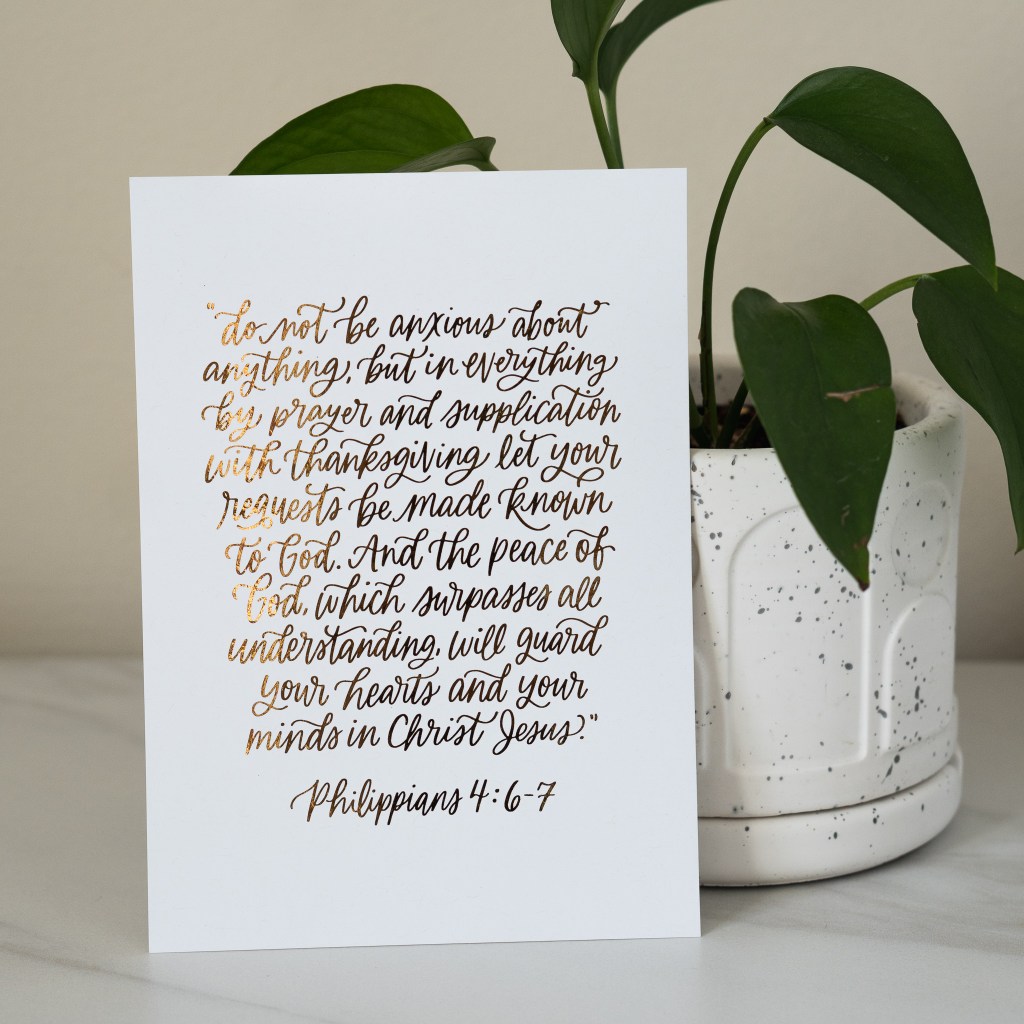
Philippians 4:6-7 Print | NO LONGER AVAILABLE

As I continued meditating on Philippians 4:4-9, I focused on verse 6. Which says, “do not be anxious about anything, but in everything by prayer and supplication with thanksgiving let your requests be made known to God.” (emphasis added) The prescription for anxiety is prayer – specifically: gratitude. I had Scripture memorized to help me combat anxiety, but that was only the first step. I needed to apply it.

In my moments of anxiety, the Spirit would remind me to think of whatever is true, honorable, just, pure, lovely, and commendable (Philippians 4:8). I knew I needed to focus on the good in my life, but it was so hard to pull myself out of the pit simply in my thoughts. So, I decided to get more proactive. I began carrying a little notepad around with me and when I felt anxious, I would write praises and words of thanks to God. The greater the anxiety, the more I would write. Within a day, I felt loads better. That one change made a world of difference.

Get Proactive

When we are anxious, it should prompt us to examine ourselves – to ask God to reveal what’s not right within us. If you are anxious ask: God, what truth about you am I not fully trusting? Repent of your unbelief and accept Christ’s forgiveness. Humble yourself before Him. Allow Him to reveal what’s not right in your heart and be willing to change and grow.

What truth about God are you not fully believing?

Could this be contributing to your own anxiety? Pray the Holy Spirit will deepen your trust in Him and His promises.

How will you start practicing gratitude to overcome anxiety?

Overcoming anxiety starts with repentance. So, confess and ask God to help you change. Maybe you’re like me and need to do something a bit more tangible and visual to practice gratitude. Will you keep a little notepad? Write in a journal? Stick post-it notes around your home? 

Ask Jesus to strengthen you as you battle anxiety and focus on gratitude. Trusting who He is and what He promises will be a game changer. Will you commit to memorizing Scripture to deepen your trust and gratitude for who He is, what He has done, and promises He will do?

Focus on prayer and progress, not perfection. We may never fully be released from anxiousness in this lifetime, but we can grow in how we respond. When anxious thoughts creep into our minds, we can choose gratitude. We can choose to trust in the Spirit of power, love, and self-control to strengthen us. (2 Timothy 1:7)


Pin it!

Permissions

Unless otherwise indicated, scripture quotations are from the ESV® Bible (The Holy Bible, English Standard Version®), Copyright © 2001 by Crossway, a publishing ministry of Good News Publishers. Used by permission. All rights reserved.

What is the Gospel?

Do you know what the Gospel is? Could you confidently articulate the Gospel message to someone else? Whether you are brand new to the Gospel or have been a believer for many years, the Gospel is for everyone. And, it’s important that we not only believe in it, but know how to articulate what we believe.

Click through the story below for a simple presentation of the Gospel. Then, we’ll go more in depth on each section below.

What is the Gospel? Story

Download this as a PDF booklet when you subscribe to my mailing list HERE. Re-pin the story on Pinterest HERE.

The Bad News

As I mentioned in the slideshow, in order to understand the good news, we have to understand the bad news. Which is: We are all born sinners in need of a Savior and cannot earn God’s favor by our own efforts. (James 2:10) In our postmodern culture, many believe there is no absolute truth – that what’s right and wrong is subjective. People who hold these beliefs do not understand their need for a Savior. If there is no absolute truth, there is no accountability for sin. So, we must start with an understanding of what the Bible says, which is that we are all dead in our sin. (Ephesians 2:1-3)

What is the Gospel? The Good News

Once we understand the bad news, we can understand the good news – the Gospel! I’ve heard it said that the Gospel is like a diamond and our sin is like a black cloth a jeweler lays down behind it to illuminate the stone’s beauty. With our sin as the backdrop, we can much more fully appreciate the beauty and magnificence of the Gospel.

So, what is the Gospel? Simply put, the Gospel is the good news that Jesus died and rose from the dead to save sinners. It’s by His grace, through faith alone that we are saved, not by works. (Ephesians 2:8-9) Jesus makes it very clear in His teachings and throughout Scripture that no amount of works can save us. Works are the fruit – or evidence – of a person who is saved. This is what James meant when we read that faith without works is dead. (James 2:14-16) It’s crucial that we understand this truth in order to be led to the true repentance that is required in order to be saved.

The Response

When reflecting on the Gospel and proclaiming it to others, we don’t simply want to stop with knowing the Gospel message. We must respond. As believers, we know in order to be saved, we must put our faith in Christ and Christ alone. But what does that mean? Jesus said in Mark 1:15 to “repent and believe in the Gospel.” 

I heard this explained so well by Todd Friel of Wretched. He said that faith and repentance are two sides of the same coin. To put our faith in Christ (or to believe) is to repent of our sins – to acknowledge our need for a Savior, confess our sins to God, and turn from our sinful ways. Belief without repentance is not true belief and vice versa. True belief always leads to repentance.

Remember: God is Sovereign

I wanted remind you that we are called by Jesus to carry out the Great Commission to go out and make disciples. (Matthew 28:16-20) However, remember that while we are called to partner with God to spread the Gospel to the nations, He alone does the saving. If you miss a part of the Gospel message when witnessing, don’t beat yourself up over it. God is sovereign. My story is a great example of this:

My Story

Growing up I heard that Jesus was God and that He died and rose from the dead to save sinners. But, it wasn’t until college, when two friends shared with me that Jesus loved me, wanted a relationship with me, and that He would forgive all my regrets and mistakes, that I understood what the Gospel meant for me personally. They didn’t share the full Gospel message with me at that moment, but God used them to bring me the pieces I was missing. 

The story God gave me is such a clear picture of how He saves us by His grace. I wouldn’t have been able to articulate the Gospel in the moment I was saved. (I didn’t even know that’s what had happened to me at the time!) But as I studied the Bible and learned more about what it meant to be saved, I discovered that by His grace, He orchestrated countless experiences throughout my life to bring me the pieces of the Gospel, and ultimately, led me to true faith and repentance in His perfect timing.

Trust in His Sovereignty

This is oftentimes how God works. It’s a great blessing to be able to present the Gospel in full to another person, but if you miss part of it, mess up the delivery, or run out of time, trust in God’s sovereignty. You may not be the person He uses to lead someone to faith, but it is still a great privilege to be used by Him to plant seeds.

My Hope and Prayer

It’s my prayer that you will personally respond by repenting and believing in the Gospel and that your belief will inspire you to tell others the good news. The Gospel changes everything! It saves dead souls and transforms individuals and cultures. I hope today you feel more equipped to articulate what you believe, and that by the power of the Spirit, you’ll carry out Jesus’s Great Commission!

Praying For Yourself

How often do you pray for yourself? Do you struggle praying yourself?

This may seem like a silly question to some of you. Maybe you pray for yourself daily. But, today I’m asking this question because in recent years, I’ve been surprised by the amount of women who share that they often struggle to pray for themselves. Sometimes it’s a seasonal struggle or for others, it constantly feels selfish or even too vulnerable. Can you relate? If you can, I hope I can encourage you today.

Making sense of personal prayer

When I think about Scripture that points to the importance of praying for yourself, I think of Psalm 139. It is a beautiful psalm written by King David who is reflecting on how intimately the Lord loves and knows him. Throughout the psalm, David praises God, reflects, confesses, and asks for right-thinking and guidance. The Bible says David was a man after God’s own heart, (Acts 13:22) so we should pay attention to the ways he communicated with God.

I’ll admit, when I studied this passage, I was a bit uncomfortable. First, I tend to try to be less “me-focused” as I pray. Aren’t Christians supposed to be Jesus and others-focused? Secondly, it went super deep. The words of Psalm 139 speak of God’s presence and knowledge of the most intimate parts about us. Reflecting on those words made me feel vulnerable, which comes with its comforts, as well as temptations to keep God at a distance.

Jesus says in Matthew 22:36-40 that the greatest commandment is to love God with our whole being. And, the second command is to love your neighbor as yourself. We are absolutely supposed to be God & others-focused, but to neglect all thoughts and prayers about ourselves would be unbiblical. 

The spectrum

It can be helpful to think of prayer for self like a spectrum. On one end is complete neglect of self, on the other end is complete self-centeredness. We need to be somewhere in the middle. God wants us to come to him with our prayers, even the ones we think are too insignificant. He wants us to pray for our personal growth and sanctification – to be made more like Christ! Being in the Word of God daily will help us stay in the middle of that spectrum, not veering too far to the left or right. Are you reading the Bible daily? If you struggle praying for yourself and aren’t in the Word regularly, that could be a big contributor to your insecurities.

Vulnerability

Praying for ourselves can also feel uncomfortably vulnerable. Do you tend to keep others at an arm’s length? Do you have walls up? Are there parts of your heart you don’t let anyone see? If that’s true in your relationships, consider how that might be true in your relationship with Christ. If you are a born again believer, the Spirit of God is dwelling in your heart! Psalm 139 says He knew everything about us before we were born and that we cannot escape Him. He already knows everything – He sees more of your sin than you do – but He still died on a cross to forgive and redeem you. He sacrificed it all in love, fully knowing you and your sins. It’s safe to be vulnerable with Him.

Start praying for yourself

If you struggle to pray for yourself, start with Psalm 139. Read the verses slowly, out loud to God. Reflect on how perfectly He understands you, how deeply He loves you, and that He is always present with you. Allow yourself to feel uncomfortable and share those feelings with Jesus. Ask Him to show you what it looks like to pray for yourself in ways that glorify Him. Ask Him to help you grow in vulnerability and intimacy with Him. It may take time for this to feel comfortable, but don’t let the discomfort keep you from seeking Jesus through personal prayer. Keep coming back to Him and watch how He will impact your relationship with Him for the better.

It is not selfish to pray for yourself. Because of Jesus, through the Spirit, we can have access to our Heavenly Father who is ready to meet with us. (Ephesians 2:18)

Pin it!

Surrendering to Christ

To repent and believe in the Gospel means surrendering to Christ and His will and way for our lives. There is an initial surrender that happens when we are born again as believers, but growing and maturing in faith requires ongoing surrender. Let’s talk about the significance of both types of surrender and what they mean for us spiritually.

Initial Surrender

The Gospel

As I stated above, true faith in Christ requires an initial surrender to God. Again, Jesus said to repent and believe in the Gospel (Mark 1:14-15), which is the message that we are all sinners in need of a savior and Jesus is that Savior. 

The Bible teaches that by nature, we are children of wrath (Ephesians 2:1-3) and that there is no forgiveness without the shedding of blood (Hebrews 9:22). So, Jesus Christ, who is both fully God and fully man, came as the perfect sacrifice. He was crucified, died, and rose from the dead to forgive sinners and justify them (declare them righteous) before God. By grace, through faith in Jesus alone, we receive this gift of salvation (Ephesians 2:8-9). 

Sinning against an eternal God, means we suffer eternal consequences if we are unrepentant. But, Jesus mercifully forgives those who genuinely confess their sins and express a desire to turn from their old ways of living and be changed by Him. True repentance leads to salvation and it requires complete surrender.

Surrendering to Christ means total trust

I read in a recent study (Amazon affiliate link) that this initial act of surrender is like signing a blank contract to God that He will fill out later. It’s as if we are saying, “God, I vow to follow you whatever the cost, whatever may come. I don’t know the future, but I trust You fully no matter what.” This is what initially surrendering to Christ looks like, which leads to saving faith.

Ongoing Surrender

Our salvation is secure

The Holy Spirit moves our hearts to surrender in faith and after that initial surrender, God’s salvation work is complete (Hallelujah)! Jesus’s last words on the cross were, “It is finished.” (John 19:30) meaning, His sacrifice was enough. We do not need to strive to gain or keep our salvation. Those truly born again are declared righteous and secure in Christ, simply by the work of Jesus on our behalf. Our works contribute nothing to our salvation. The Bible makes this very clear and this is the message of many of Jesus’ teachings during His ministry.

Surrendering to Christ leads to sanctification

However, our works do contribute to our sanctification, which is the ongoing process of maturing in our faith and being made more like Christ. This type of growth requires ongoing surrender. Our “legal status” before God is “righteous,” but the reality is, we still sin. We still fall back into old, sinful habits and ways of thinking. We can easily forget that our lives are not our own. They now belong to Christ and we have new life in Him (Ephesians 4:17-24). This truth should lead us into deeper areas of surrender. But, what does that look like?

The Spirit leads us in surrender

When I recently determined that I would live more intentionally surrendered to Christ, my intentions were good, but I caught myself surrendering in my flesh in some ways. To surrender is to be led by the Spirit in how He wants you to use your time, not necessarily how you think you should be spending your time.

Fully surrendering to Christ does not necessarily mean that you have to give up all your free time, hobbies, friends, desires, etc. It means holding the things you care about loosely – in submission to God. He may require you to give up something completely, partially, or not at all. The things we enjoy that don’t necessarily seem “spiritual” are oftentimes gifts for our enjoyment! But, when those gifts become idols or we are engaged in sinful behavior, God desires to do a work in us that requires surrender.

Ultimately, ongoing surrender means holding all He has given us with open hands. It requires trusting in His promises to provide for our every need and humility to submit to His will for our lives.

Surrendering to Christ

Surrendering to Christ takes faith. Whether it be that first, initial surrender that leads to saving faith or it’s the hundredth time in an ongoing process, we all can ask God how we can live lives surrendered to Him. Here are some questions to consider:

  • What is keeping you from fully surrendering to Christ in faith? Start reading the Bible (I recommend beginning with Matthew or John) and ask God to reveal who He truly is to You.
  • What areas of your life are most challenging to submit to God? Ask Him to reveal why that is and be open to His response.
  • What is one thing God might be asking you to surrender starting today? Is it how you spend a certain amount of time or money? Could it be a certain way of thinking? Does it mean saying yes to something or no to another?

God is calling us to deeper surrender and we can trust Him to provide for our every need in the process.

If you would like more encouragement and resources sent to you weekly, subscribe to my mailing list! I’ll start by sending you a free devotional to help you get into the Word and reflect on truth, but I’ve got a whole bunch of Bible study and prayer resources to send your way as we get to know each other better. Hope to see you there!